Buy kapital24.eu ?
We are moving the project
kapital24.eu .
Are you interested in purchasing the domain
kapital24.eu ?
domain@kv-gmbh.de · 0541-91531010
Buy kapital24.eu ?
Can complexity be objectively measured?
Complexity can be objectively measured to some extent, especially in the context of information theory and algorithmic complexity. In information theory, complexity can be measured using metrics such as entropy and Kolmogorov complexity, which provide objective measures of the amount of information or computational resources required to describe a system. However, when it comes to measuring the complexity of real-world systems or phenomena, there is often a subjective element involved, as different observers may prioritize different aspects of complexity. Therefore, while certain aspects of complexity can be objectively measured, the overall assessment of complexity may still involve some degree of subjectivity. **
What is the complexity of Mergesort?
The time complexity of Mergesort is O(n log n) in the worst-case scenario, where n is the number of elements in the array. This complexity arises from the fact that Mergesort divides the array into halves recursively and then merges them back together in sorted order. The space complexity of Mergesort is O(n) due to the need for additional space to store the divided subarrays during the sorting process. Overall, Mergesort is an efficient sorting algorithm that performs well on large datasets. **
Similar search terms for Complexity
Top-Angebote
Products related to Complexity:
-
DESIGN ART "Designart ""Gold Purple Transcending Complexity II"" Abstract Curtain - Blackout Abstract Curtain - 1 Panel""Bring a breath of fresh air to your windows and spruce up any space in your home with this ""Gold Purple Transcending Complexity II"" Abstract 1 panel curtain. This beautiful Modern & Contemporary curtain is handmade on demand just for you."72,42 $*Shipping: 0,00 $Secure redirect to the provider
-
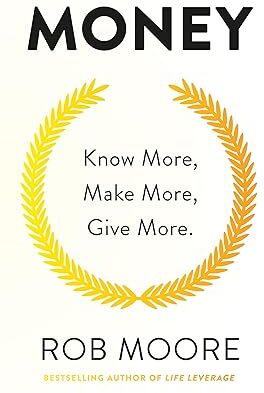
John Murray One Money: Know More, Make More, Give More by Rob Moore - Personal Finance Paperback - New - Practical Guide to Building WealthA straight-talking guide to financial independence, 'Money: Know More, Make More, Give More' by Rob Moore is ideal for aspiring entrepreneurs, first-time investors, or anyone looking to change their approach to earning, saving, and growing their money. Rob Moore, a self-made multi-millionaire and property investor, distills years of experience into a practical roadmap that breaks down the real rules of the money game. He argues that financial success is not down to luck or a single big break, but rather a game with knowable rules that can be understood and followed. This brand-new paperback is a must-read for anyone looking to take control of their finances and achieve financial independence.7,99 £*Shipping: 2,99 £Secure redirect to the provider
-
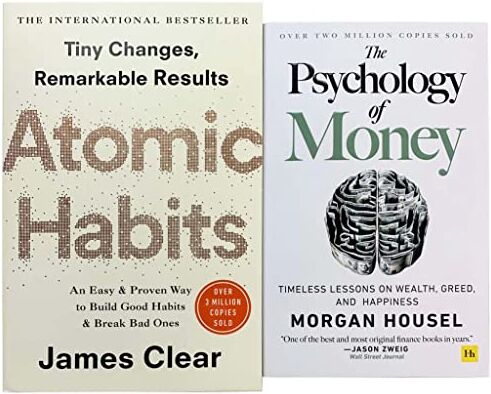
Random House Business/Harriman House ltd Atomic Habits & The Psychology of Money – 2 Books Collection Set Personal Growth, Wealth & Mindset BestsellersAtomic Habits People think that when you want to change your life, you need to think big. But world-renowned habits expert James Clear has discovered another way. He knows that real change comes from the compound effect of hundreds of small decisions: doing two push-ups a day, waking up five minutes early, or holding a single short phone call. He calls them atomic habits. In this ground-breaking book, Clears reveals exactly how these minuscule changes can grow into such life-altering outcomes. He uncovers a handful of simple life hacks (the forgotten art of Habit Stacking, the unexpected power of the Two Minute Rule, or the trick to entering the Goldilocks Zone), and delves into cutting-edge psychology and neuroscience to explain why they matter. Along the way, he tells inspiring stories of Olympic gold medalists, leading CEOs, and distinguished scientists who have used the science of tiny habits to stay productive, motivated, and happy. The Psychology of Money Doing well with money isn't necessarily about what you know. It's about how you behave. And behaviour is hard to teach, even to really smart people. Money investing, personal finance, and business decisions is typically taught as a math-based field, where data and formulas tell us exactly what to do. But in the real world people don't make financial decisions on a spreadsheet. They make them at the dinner table, or in a meeting room, where personal history, your own unique view of the world, ego, pride, marketing, and odd incentives are scrambled together. In The Psychology of Money, award-winning author Morgan Housel shares 19 short stories exploring the strange ways people think about money and teaches you how to make better sense of one of life's most important topics.15,99 £*Shipping: 2,99 £Secure redirect to the provider
-
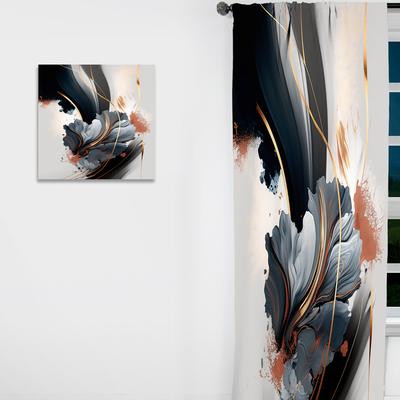
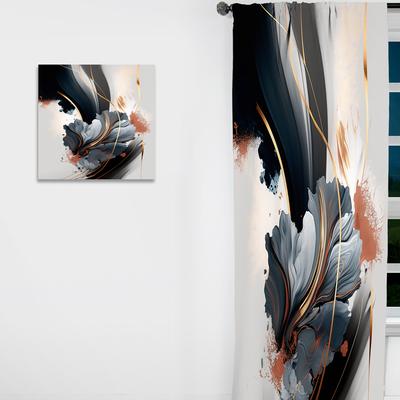
DESIGN ART "Designart ""Gold Purple Transcending Complexity II"" Abstract Curtain - Blackout Abstract Curtain - 1 Panel""Bring a breath of fresh air to your windows and spruce up any space in your home with this ""Gold Purple Transcending Complexity II"" Abstract 1 panel curtain. This beautiful Modern & Contemporary curtain is handmade on demand just for you."83,36 $*Shipping: 0,00 $Secure redirect to the provider

-
How can one get rid of complexity?
One can get rid of complexity by breaking down the problem or situation into smaller, more manageable parts. This can help to identify the root causes of the complexity and address them individually. Additionally, simplifying processes, communication, and decision-making can help reduce complexity. It is also important to prioritize and focus on the most important aspects, while letting go of unnecessary details. Finally, seeking input and collaboration from others can provide fresh perspectives and help to streamline complex situations. **
-
What is the complexity of composing two functions?
Composing two functions has a complexity of O(1), as it involves simply applying one function to the output of the other. The time complexity does not depend on the size of the input, as the functions are applied sequentially. Therefore, the complexity of composing two functions is constant and does not increase with the size of the input. **
-
What are the Big O notations for time complexity?
The Big O notations for time complexity are used to describe the upper bound on the growth rate of an algorithm's running time as the input size increases. Some common Big O notations include O(1) for constant time complexity, O(log n) for logarithmic time complexity, O(n) for linear time complexity, O(n^2) for quadratic time complexity, and O(2^n) for exponential time complexity. These notations help in analyzing and comparing the efficiency of different algorithms. **
-
What are the Landau symbols for the time complexity?
The Landau symbols for time complexity are commonly used to describe the upper and lower bounds of an algorithm's running time. The most commonly used Landau symbols for time complexity are O (big O) for upper bound, Ω (big omega) for lower bound, and Θ (big theta) for both upper and lower bounds. These symbols are used to express the growth rate of an algorithm's running time in terms of the input size. For example, if an algorithm has a time complexity of O(n^2), it means that the running time of the algorithm grows no faster than n^2 as the input size increases. **

How do you determine the complexity of a function?
The complexity of a function can be determined by analyzing its time and space requirements. This can be done by examining the number of operations the function performs and the amount of memory it uses. Additionally, the complexity can be influenced by the size of the input data and the efficiency of the algorithm used in the function. By considering these factors, one can determine the complexity of a function, which is often expressed using Big O notation. **
What does the complexity class NP mean in computer science?
In computer science, the complexity class NP (nondeterministic polynomial time) refers to a set of decision problems that can be verified in polynomial time. This means that given a potential solution to a problem, it can be efficiently checked to determine if it is correct. However, finding the solution itself may not be efficient, as it may require trying all possible solutions. NP problems are often associated with the concept of nondeterministic Turing machines, which can guess the correct solution and then verify it in polynomial time. The question of whether NP problems can be solved in polynomial time is one of the most important open problems in computer science, known as the P vs. NP problem. **
Top-Angebote
Products related to Complexity:
-
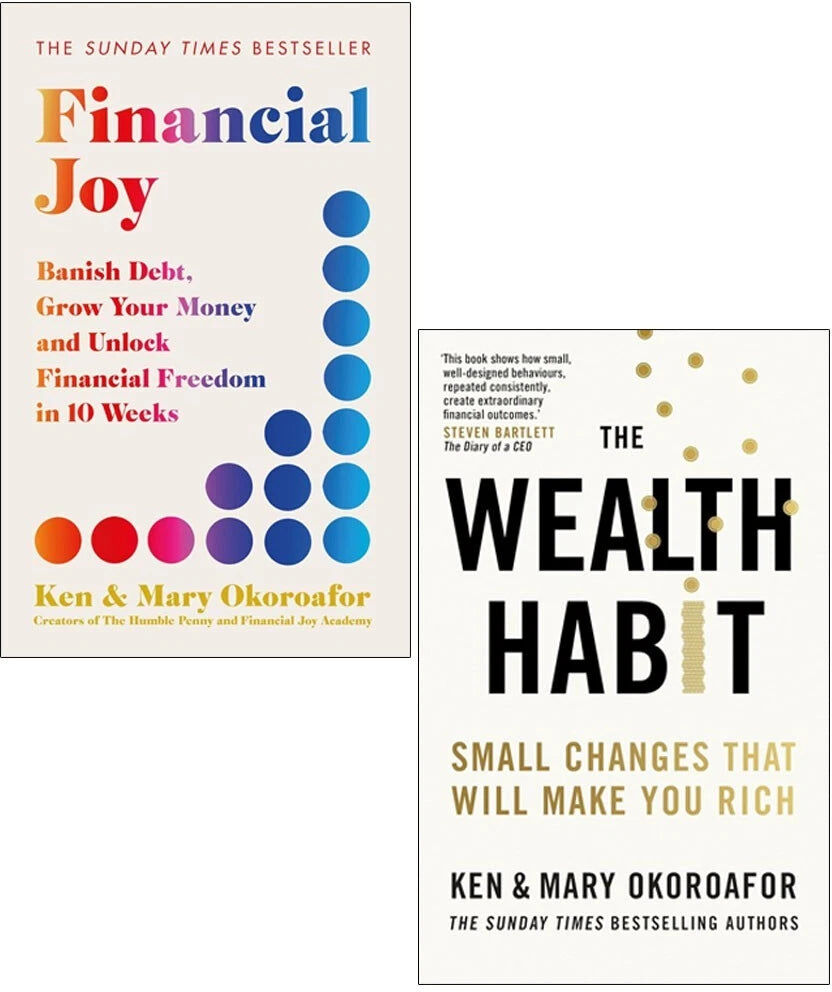
Quercus Publishing Financial Joy & The Wealth Habit by Ken & Mary Okoroafor - Paperback 2 Book Set - Personal Finance & Money HabitsAchieve financial freedom with this two-book collection by Ken and Mary Okoroafor. The set includes 'Financial Joy' and 'The Wealth Habit', two paperbacks that offer a complete roadmap to financial independence. Written from the authors' lived experience, this collection combines practical budgeting steps with small daily habits that compound into lasting wealth. The authors, founders of The Humble Penny and The Financial Joy Academy, share the strategies they used to pay off their mortgage and achieve financial independence by age 34. This set is ideal for anyone starting or restarting their money journey, and provides a life-changing plan to help readers turn their finances around while still enjoying life.13,99 £*Shipping: 2,99 £Secure redirect to the provider
-
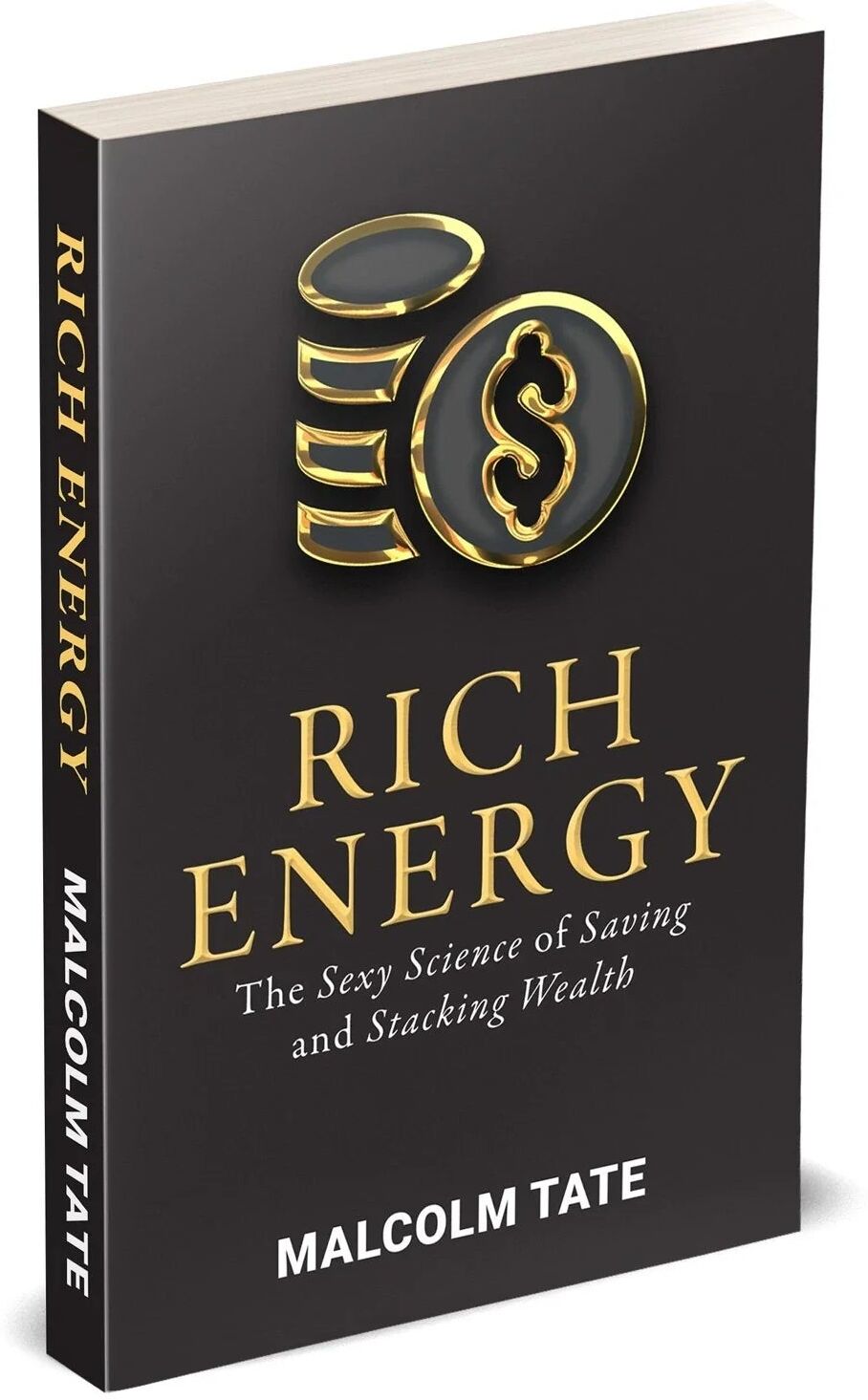
Rupa Publications RICH ENERGY: The Sexy Science of Saving & Stacking Wealth by Malcolm Tate - Paperback - Personal Finance & Money Mindset BookRich Energy: The Sexy Science of Saving; Stacking Wealth by Malcolm Tate is a contemporary take on personal finance that treats money as a mindset rather than a magic trick. Author Malcolm Tate reframes saving, spending, and investing as everyday habits rather than distant goals, giving readers a confident and accessible entry point into building lasting financial wellbeing without the jargon or judgment usually attached to money advice. This paperback book approaches personal finance as a lifestyle upgrade, focusing on the psychology behind spending triggers, the quiet discipline behind consistent saving, and the confidence that comes from understanding your financial situation. Published by Rupa Publications, this book offers a fresh perspective on managing your finances and achieving financial stability.2,99 £*Shipping: 2,99 £Secure redirect to the provider
-
DESIGN ART "Designart ""Gold Purple Transcending Complexity II"" Abstract Curtain - Blackout Abstract Curtain - 1 Panel""Bring a breath of fresh air to your windows and spruce up any space in your home with this ""Gold Purple Transcending Complexity II"" Abstract 1 panel curtain. This beautiful Modern & Contemporary curtain is handmade on demand just for you."72,42 $*Shipping: 0,00 $Secure redirect to the provider
-
John Murray One Money: Know More, Make More, Give More by Rob Moore - Personal Finance Paperback - New - Practical Guide to Building WealthA straight-talking guide to financial independence, 'Money: Know More, Make More, Give More' by Rob Moore is ideal for aspiring entrepreneurs, first-time investors, or anyone looking to change their approach to earning, saving, and growing their money. Rob Moore, a self-made multi-millionaire and property investor, distills years of experience into a practical roadmap that breaks down the real rules of the money game. He argues that financial success is not down to luck or a single big break, but rather a game with knowable rules that can be understood and followed. This brand-new paperback is a must-read for anyone looking to take control of their finances and achieve financial independence.7,99 £*Shipping: 2,99 £Secure redirect to the provider
-
Can complexity be objectively measured?
Complexity can be objectively measured to some extent, especially in the context of information theory and algorithmic complexity. In information theory, complexity can be measured using metrics such as entropy and Kolmogorov complexity, which provide objective measures of the amount of information or computational resources required to describe a system. However, when it comes to measuring the complexity of real-world systems or phenomena, there is often a subjective element involved, as different observers may prioritize different aspects of complexity. Therefore, while certain aspects of complexity can be objectively measured, the overall assessment of complexity may still involve some degree of subjectivity. **
-
What is the complexity of Mergesort?
The time complexity of Mergesort is O(n log n) in the worst-case scenario, where n is the number of elements in the array. This complexity arises from the fact that Mergesort divides the array into halves recursively and then merges them back together in sorted order. The space complexity of Mergesort is O(n) due to the need for additional space to store the divided subarrays during the sorting process. Overall, Mergesort is an efficient sorting algorithm that performs well on large datasets. **
-
How can one get rid of complexity?
One can get rid of complexity by breaking down the problem or situation into smaller, more manageable parts. This can help to identify the root causes of the complexity and address them individually. Additionally, simplifying processes, communication, and decision-making can help reduce complexity. It is also important to prioritize and focus on the most important aspects, while letting go of unnecessary details. Finally, seeking input and collaboration from others can provide fresh perspectives and help to streamline complex situations. **
-
What is the complexity of composing two functions?
Composing two functions has a complexity of O(1), as it involves simply applying one function to the output of the other. The time complexity does not depend on the size of the input, as the functions are applied sequentially. Therefore, the complexity of composing two functions is constant and does not increase with the size of the input. **
Similar search terms for Complexity
-
Random House Business/Harriman House ltd Atomic Habits & The Psychology of Money – 2 Books Collection Set Personal Growth, Wealth & Mindset BestsellersAtomic Habits People think that when you want to change your life, you need to think big. But world-renowned habits expert James Clear has discovered another way. He knows that real change comes from the compound effect of hundreds of small decisions: doing two push-ups a day, waking up five minutes early, or holding a single short phone call. He calls them atomic habits. In this ground-breaking book, Clears reveals exactly how these minuscule changes can grow into such life-altering outcomes. He uncovers a handful of simple life hacks (the forgotten art of Habit Stacking, the unexpected power of the Two Minute Rule, or the trick to entering the Goldilocks Zone), and delves into cutting-edge psychology and neuroscience to explain why they matter. Along the way, he tells inspiring stories of Olympic gold medalists, leading CEOs, and distinguished scientists who have used the science of tiny habits to stay productive, motivated, and happy. The Psychology of Money Doing well with money isn't necessarily about what you know. It's about how you behave. And behaviour is hard to teach, even to really smart people. Money investing, personal finance, and business decisions is typically taught as a math-based field, where data and formulas tell us exactly what to do. But in the real world people don't make financial decisions on a spreadsheet. They make them at the dinner table, or in a meeting room, where personal history, your own unique view of the world, ego, pride, marketing, and odd incentives are scrambled together. In The Psychology of Money, award-winning author Morgan Housel shares 19 short stories exploring the strange ways people think about money and teaches you how to make better sense of one of life's most important topics.15,99 £*Shipping: 2,99 £Secure redirect to the provider
-
DESIGN ART "Designart ""Gold Purple Transcending Complexity II"" Abstract Curtain - Blackout Abstract Curtain - 1 Panel""Bring a breath of fresh air to your windows and spruce up any space in your home with this ""Gold Purple Transcending Complexity II"" Abstract 1 panel curtain. This beautiful Modern & Contemporary curtain is handmade on demand just for you."83,36 $*Shipping: 0,00 $Secure redirect to the provider
-
DESIGN ART "Designart ""Gold Purple Transcending Complexity II"" Abstract Curtain - Blackout Abstract Curtain - 1 Panel""Bring a breath of fresh air to your windows and spruce up any space in your home with this ""Gold Purple Transcending Complexity II"" Abstract 1 panel curtain. This beautiful Modern & Contemporary curtain is handmade on demand just for you."88,65 $*Shipping: 0,00 $Secure redirect to the provider
-
DESIGN ART "Designart ""Gold Purple Transcending Complexity II"" Abstract Curtain - Blackout Abstract Curtain - 1 Panel""Bring a breath of fresh air to your windows and spruce up any space in your home with this ""Gold Purple Transcending Complexity II"" Abstract 1 panel curtain. This beautiful Modern & Contemporary curtain is handmade on demand just for you."90,87 $*Shipping: 0,00 $Secure redirect to the provider
-
What are the Big O notations for time complexity?
The Big O notations for time complexity are used to describe the upper bound on the growth rate of an algorithm's running time as the input size increases. Some common Big O notations include O(1) for constant time complexity, O(log n) for logarithmic time complexity, O(n) for linear time complexity, O(n^2) for quadratic time complexity, and O(2^n) for exponential time complexity. These notations help in analyzing and comparing the efficiency of different algorithms. **
-
What are the Landau symbols for the time complexity?
The Landau symbols for time complexity are commonly used to describe the upper and lower bounds of an algorithm's running time. The most commonly used Landau symbols for time complexity are O (big O) for upper bound, Ω (big omega) for lower bound, and Θ (big theta) for both upper and lower bounds. These symbols are used to express the growth rate of an algorithm's running time in terms of the input size. For example, if an algorithm has a time complexity of O(n^2), it means that the running time of the algorithm grows no faster than n^2 as the input size increases. **
-
How do you determine the complexity of a function?
The complexity of a function can be determined by analyzing its time and space requirements. This can be done by examining the number of operations the function performs and the amount of memory it uses. Additionally, the complexity can be influenced by the size of the input data and the efficiency of the algorithm used in the function. By considering these factors, one can determine the complexity of a function, which is often expressed using Big O notation. **
-
What does the complexity class NP mean in computer science?
In computer science, the complexity class NP (nondeterministic polynomial time) refers to a set of decision problems that can be verified in polynomial time. This means that given a potential solution to a problem, it can be efficiently checked to determine if it is correct. However, finding the solution itself may not be efficient, as it may require trying all possible solutions. NP problems are often associated with the concept of nondeterministic Turing machines, which can guess the correct solution and then verify it in polynomial time. The question of whether NP problems can be solved in polynomial time is one of the most important open problems in computer science, known as the P vs. NP problem. **
* All prices are inclusive of VAT and, if applicable, plus shipping costs. The offer information is based on the details provided by the respective shop and is updated through automated processes. Real-time updates do not occur, so deviations can occur in individual cases. ** Note: Parts of this content were created by AI.