Buy kapital24.eu ?
We are moving the project
kapital24.eu .
Are you interested in purchasing the domain
kapital24.eu ?
domain@kv-gmbh.de · 0541-91531010
Buy kapital24.eu ?
What is equivalence?
Equivalence refers to the state of being equal or interchangeable in value, function, or meaning. In mathematics, equivalence is used to denote that two expressions or equations have the same value or meaning. In other contexts, equivalence can refer to the similarity or comparability of two things. Overall, equivalence implies a relationship of equality or similarity between two or more entities. **
What are equivalence classes?
Equivalence classes are sets of elements that are considered equivalent based on a specific relation or criteria. In mathematics, equivalence classes are used to partition a set into subsets where each element in a subset is considered equivalent to every other element in that subset. Equivalence classes help to simplify complex structures and make it easier to analyze and understand relationships between elements. **

Similar search terms for Equivalence
Top-Angebote
Products related to Equivalence:
-
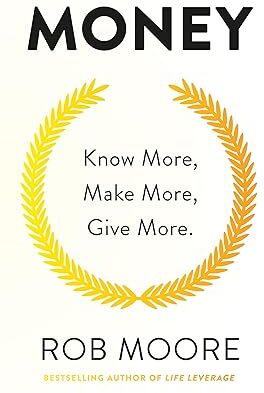
John Murray One Money: Know More, Make More, Give More by Rob Moore - Personal Finance Paperback - New - Practical Guide to Building WealthA straight-talking guide to financial independence, 'Money: Know More, Make More, Give More' by Rob Moore is ideal for aspiring entrepreneurs, first-time investors, or anyone looking to change their approach to earning, saving, and growing their money. Rob Moore, a self-made multi-millionaire and property investor, distills years of experience into a practical roadmap that breaks down the real rules of the money game. He argues that financial success is not down to luck or a single big break, but rather a game with knowable rules that can be understood and followed. This brand-new paperback is a must-read for anyone looking to take control of their finances and achieve financial independence.7,99 £*Shipping: 2,99 £Secure redirect to the provider
-
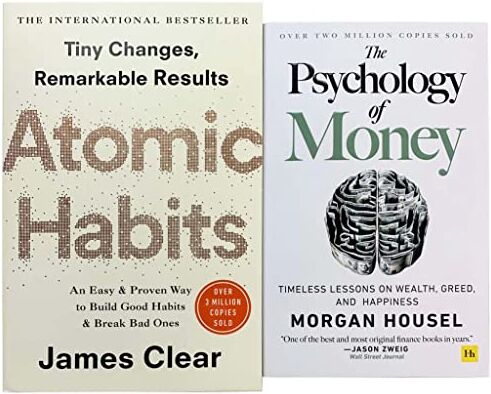
Random House Business/Harriman House ltd Atomic Habits & The Psychology of Money – 2 Books Collection Set Personal Growth, Wealth & Mindset BestsellersAtomic Habits People think that when you want to change your life, you need to think big. But world-renowned habits expert James Clear has discovered another way. He knows that real change comes from the compound effect of hundreds of small decisions: doing two push-ups a day, waking up five minutes early, or holding a single short phone call. He calls them atomic habits. In this ground-breaking book, Clears reveals exactly how these minuscule changes can grow into such life-altering outcomes. He uncovers a handful of simple life hacks (the forgotten art of Habit Stacking, the unexpected power of the Two Minute Rule, or the trick to entering the Goldilocks Zone), and delves into cutting-edge psychology and neuroscience to explain why they matter. Along the way, he tells inspiring stories of Olympic gold medalists, leading CEOs, and distinguished scientists who have used the science of tiny habits to stay productive, motivated, and happy. The Psychology of Money Doing well with money isn't necessarily about what you know. It's about how you behave. And behaviour is hard to teach, even to really smart people. Money investing, personal finance, and business decisions is typically taught as a math-based field, where data and formulas tell us exactly what to do. But in the real world people don't make financial decisions on a spreadsheet. They make them at the dinner table, or in a meeting room, where personal history, your own unique view of the world, ego, pride, marketing, and odd incentives are scrambled together. In The Psychology of Money, award-winning author Morgan Housel shares 19 short stories exploring the strange ways people think about money and teaches you how to make better sense of one of life's most important topics.15,99 £*Shipping: 2,99 £Secure redirect to the provider
-
Hay House UK Make Money Easy by Lewis Howes - Hardback - Financial Freedom & Money Mindset Guide for Adults - Personal Finance BestsellerCreate financial freedom and live a richer life with this practical guide by Lewis Howes. This hardback book is a mindset-first approach to building genuine financial freedom, drawing on interviews with leading financial experts, cutting-edge money psychology research, and the author's own journey from broke to abundant. It helps readers uncover their unique 'Money Style,' build a powerful 'Money Mindset,' and develop a clear, actionable roadmap to earn more, worry less, and feel at peace with their finances. Written by the host of The School of Greatness podcast, this book is perfect for anyone tired of feeling stuck with money.21,99 £*Shipping: 2,99 £Secure redirect to the provider
-
The Readers Paradise The Psychology of Money Mindset: Decoding Financial Behaviour by Dr. N. Gosain - Paperback - Personal Finance & Money Psychology GuideDiscover the psychology behind your financial decisions with this practical guide by Dr. N. Gosain. The Psychology of Money Mindset: Decoding Financial Behaviour is a thought-provoking read that explores the psychological roots of our financial behaviour and shows how mindset, not just income, determines long-term financial success. This accessible paperback helps readers uncover unconscious habits, biases, and emotional triggers that shape spending, saving, and investing, and provides real-world money management advice to build a healthier, more confident relationship with money and take control of their financial future.2,99 £*Shipping: 2,99 £Secure redirect to the provider


-
Is equivalence transformation allowed?
Yes, equivalence transformation is allowed in mathematics. It involves manipulating an equation or expression by applying operations that do not change the solution set of the equation. This can include adding or subtracting the same quantity to both sides of an equation, multiplying or dividing both sides by the same non-zero number, or applying other algebraic operations that preserve the equality of the original equation. Equivalence transformations are commonly used to simplify equations, solve for unknown variables, or prove mathematical statements. **
-
Does this equivalence hold?
Without knowing the specific equivalence being referred to, it is difficult to provide a definitive answer. Equivalences in mathematics and logic are typically proven through rigorous reasoning and logical deduction. It is important to carefully examine the definitions and properties of the elements involved in the equivalence to determine if it holds true. Without further information, it is not possible to determine if the equivalence holds. **
-
Are equivalence classes equal?
Equivalence classes are not equal in the sense that they may contain different elements. However, equivalence classes are equal in the sense that they represent the same set of elements that are equivalent under a given equivalence relation. In other words, two equivalence classes are equal if they contain the same elements that are related to each other in the same way according to the equivalence relation. **
-
What are equivalence relations?
Equivalence relations are a type of relation between elements of a set that satisfy three properties: reflexivity, symmetry, and transitivity. Reflexivity means that every element is related to itself. Symmetry means that if one element is related to another, then the other is related to the first. Transitivity means that if one element is related to a second, and the second is related to a third, then the first is related to the third. Equivalence relations are important in mathematics and other fields because they allow us to classify elements of a set into distinct equivalence classes based on their relationships with each other. **

What are equivalence points?
Equivalence points are the points in a titration where the amount of titrant added is stoichiometrically equivalent to the amount of analyte present in the sample. At the equivalence point, the reaction between the titrant and analyte is complete, and the solution is in its most stable state. This is often indicated by a sharp change in pH or a color change in the solution. The equivalence point is used to determine the concentration of the analyte in the sample. **
Can you determine all equivalence classes with respect to this equivalence relation?
No, I cannot determine all equivalence classes with respect to the equivalence relation without knowing the specific relation in question. The equivalence classes depend on the specific definition of the relation and the elements involved. Each equivalence class represents a set of elements that are related to each other according to the given relation. **
Top-Angebote
Products related to Equivalence:
-
Quercus Publishing Financial Joy & The Wealth Habit by Ken & Mary Okoroafor - Paperback 2 Book Set - Personal Finance & Money HabitsAchieve financial freedom with this two-book collection by Ken and Mary Okoroafor. The set includes 'Financial Joy' and 'The Wealth Habit', two paperbacks that offer a complete roadmap to financial independence. Written from the authors' lived experience, this collection combines practical budgeting steps with small daily habits that compound into lasting wealth. The authors, founders of The Humble Penny and The Financial Joy Academy, share the strategies they used to pay off their mortgage and achieve financial independence by age 34. This set is ideal for anyone starting or restarting their money journey, and provides a life-changing plan to help readers turn their finances around while still enjoying life.13,99 £*Shipping: 2,99 £Secure redirect to the provider
-
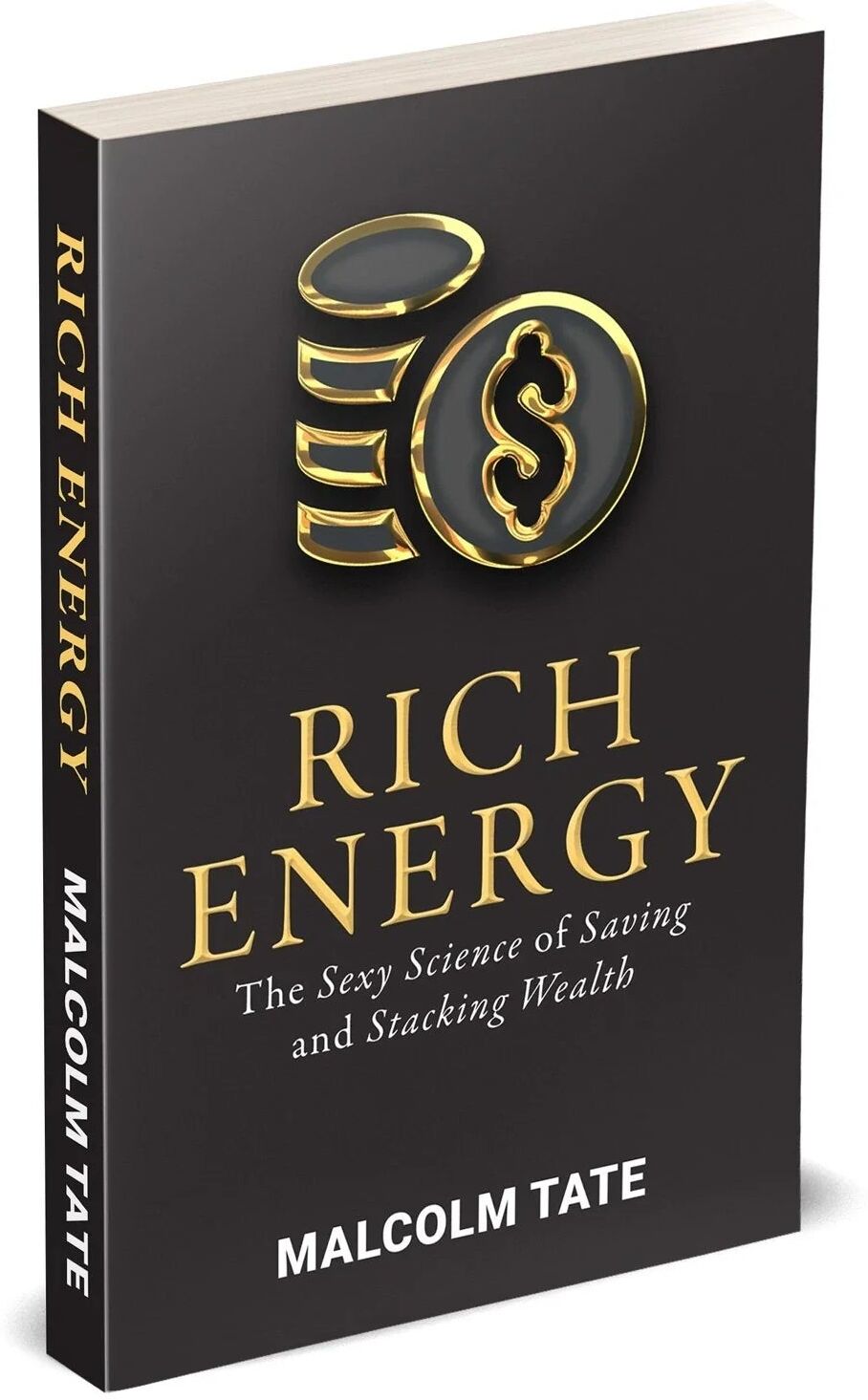
Rupa Publications RICH ENERGY: The Sexy Science of Saving & Stacking Wealth by Malcolm Tate - Paperback - Personal Finance & Money Mindset BookRich Energy: The Sexy Science of Saving; Stacking Wealth by Malcolm Tate is a contemporary take on personal finance that treats money as a mindset rather than a magic trick. Author Malcolm Tate reframes saving, spending, and investing as everyday habits rather than distant goals, giving readers a confident and accessible entry point into building lasting financial wellbeing without the jargon or judgment usually attached to money advice. This paperback book approaches personal finance as a lifestyle upgrade, focusing on the psychology behind spending triggers, the quiet discipline behind consistent saving, and the confidence that comes from understanding your financial situation. Published by Rupa Publications, this book offers a fresh perspective on managing your finances and achieving financial stability.2,99 £*Shipping: 2,99 £Secure redirect to the provider
-
John Murray One Money: Know More, Make More, Give More by Rob Moore - Personal Finance Paperback - New - Practical Guide to Building WealthA straight-talking guide to financial independence, 'Money: Know More, Make More, Give More' by Rob Moore is ideal for aspiring entrepreneurs, first-time investors, or anyone looking to change their approach to earning, saving, and growing their money. Rob Moore, a self-made multi-millionaire and property investor, distills years of experience into a practical roadmap that breaks down the real rules of the money game. He argues that financial success is not down to luck or a single big break, but rather a game with knowable rules that can be understood and followed. This brand-new paperback is a must-read for anyone looking to take control of their finances and achieve financial independence.7,99 £*Shipping: 2,99 £Secure redirect to the provider
-
Random House Business/Harriman House ltd Atomic Habits & The Psychology of Money – 2 Books Collection Set Personal Growth, Wealth & Mindset BestsellersAtomic Habits People think that when you want to change your life, you need to think big. But world-renowned habits expert James Clear has discovered another way. He knows that real change comes from the compound effect of hundreds of small decisions: doing two push-ups a day, waking up five minutes early, or holding a single short phone call. He calls them atomic habits. In this ground-breaking book, Clears reveals exactly how these minuscule changes can grow into such life-altering outcomes. He uncovers a handful of simple life hacks (the forgotten art of Habit Stacking, the unexpected power of the Two Minute Rule, or the trick to entering the Goldilocks Zone), and delves into cutting-edge psychology and neuroscience to explain why they matter. Along the way, he tells inspiring stories of Olympic gold medalists, leading CEOs, and distinguished scientists who have used the science of tiny habits to stay productive, motivated, and happy. The Psychology of Money Doing well with money isn't necessarily about what you know. It's about how you behave. And behaviour is hard to teach, even to really smart people. Money investing, personal finance, and business decisions is typically taught as a math-based field, where data and formulas tell us exactly what to do. But in the real world people don't make financial decisions on a spreadsheet. They make them at the dinner table, or in a meeting room, where personal history, your own unique view of the world, ego, pride, marketing, and odd incentives are scrambled together. In The Psychology of Money, award-winning author Morgan Housel shares 19 short stories exploring the strange ways people think about money and teaches you how to make better sense of one of life's most important topics.15,99 £*Shipping: 2,99 £Secure redirect to the provider
-
What is equivalence?
Equivalence refers to the state of being equal or interchangeable in value, function, or meaning. In mathematics, equivalence is used to denote that two expressions or equations have the same value or meaning. In other contexts, equivalence can refer to the similarity or comparability of two things. Overall, equivalence implies a relationship of equality or similarity between two or more entities. **
-
What are equivalence classes?
Equivalence classes are sets of elements that are considered equivalent based on a specific relation or criteria. In mathematics, equivalence classes are used to partition a set into subsets where each element in a subset is considered equivalent to every other element in that subset. Equivalence classes help to simplify complex structures and make it easier to analyze and understand relationships between elements. **
-
Is equivalence transformation allowed?
Yes, equivalence transformation is allowed in mathematics. It involves manipulating an equation or expression by applying operations that do not change the solution set of the equation. This can include adding or subtracting the same quantity to both sides of an equation, multiplying or dividing both sides by the same non-zero number, or applying other algebraic operations that preserve the equality of the original equation. Equivalence transformations are commonly used to simplify equations, solve for unknown variables, or prove mathematical statements. **
-
Does this equivalence hold?
Without knowing the specific equivalence being referred to, it is difficult to provide a definitive answer. Equivalences in mathematics and logic are typically proven through rigorous reasoning and logical deduction. It is important to carefully examine the definitions and properties of the elements involved in the equivalence to determine if it holds true. Without further information, it is not possible to determine if the equivalence holds. **
Similar search terms for Equivalence
-
Hay House UK Make Money Easy by Lewis Howes - Hardback - Financial Freedom & Money Mindset Guide for Adults - Personal Finance BestsellerCreate financial freedom and live a richer life with this practical guide by Lewis Howes. This hardback book is a mindset-first approach to building genuine financial freedom, drawing on interviews with leading financial experts, cutting-edge money psychology research, and the author's own journey from broke to abundant. It helps readers uncover their unique 'Money Style,' build a powerful 'Money Mindset,' and develop a clear, actionable roadmap to earn more, worry less, and feel at peace with their finances. Written by the host of The School of Greatness podcast, this book is perfect for anyone tired of feeling stuck with money.21,99 £*Shipping: 2,99 £Secure redirect to the provider
-
The Readers Paradise The Psychology of Money Mindset: Decoding Financial Behaviour by Dr. N. Gosain - Paperback - Personal Finance & Money Psychology GuideDiscover the psychology behind your financial decisions with this practical guide by Dr. N. Gosain. The Psychology of Money Mindset: Decoding Financial Behaviour is a thought-provoking read that explores the psychological roots of our financial behaviour and shows how mindset, not just income, determines long-term financial success. This accessible paperback helps readers uncover unconscious habits, biases, and emotional triggers that shape spending, saving, and investing, and provides real-world money management advice to build a healthier, more confident relationship with money and take control of their financial future.2,99 £*Shipping: 2,99 £Secure redirect to the provider
-
Quercus Publishing The Wealth Habit by Ken & Mary Okoroafor - Sunday Times Bestseller - Paperback - Personal Finance Book for AdultsThe Wealth Habit is a guide to building lasting wealth through small, repeatable habits. Written by money experts Ken and Mary Okoroafor, the founders of The Humble Penny, this book shows that financial freedom is not reserved for the lucky few. Drawing on their own journey to financial independence, achieved debt-free by age 34, the authors offer a behaviour-first system for building wealth. This accessible and motivating read is perfect for anyone looking to change their relationship with money, one simple daily action at a time. Published by Quercus Publishing, this paperback is a Sunday Times bestselling guide to achieving financial freedom through small, achievable steps.6,99 £*Shipping: 2,99 £Secure redirect to the provider
-
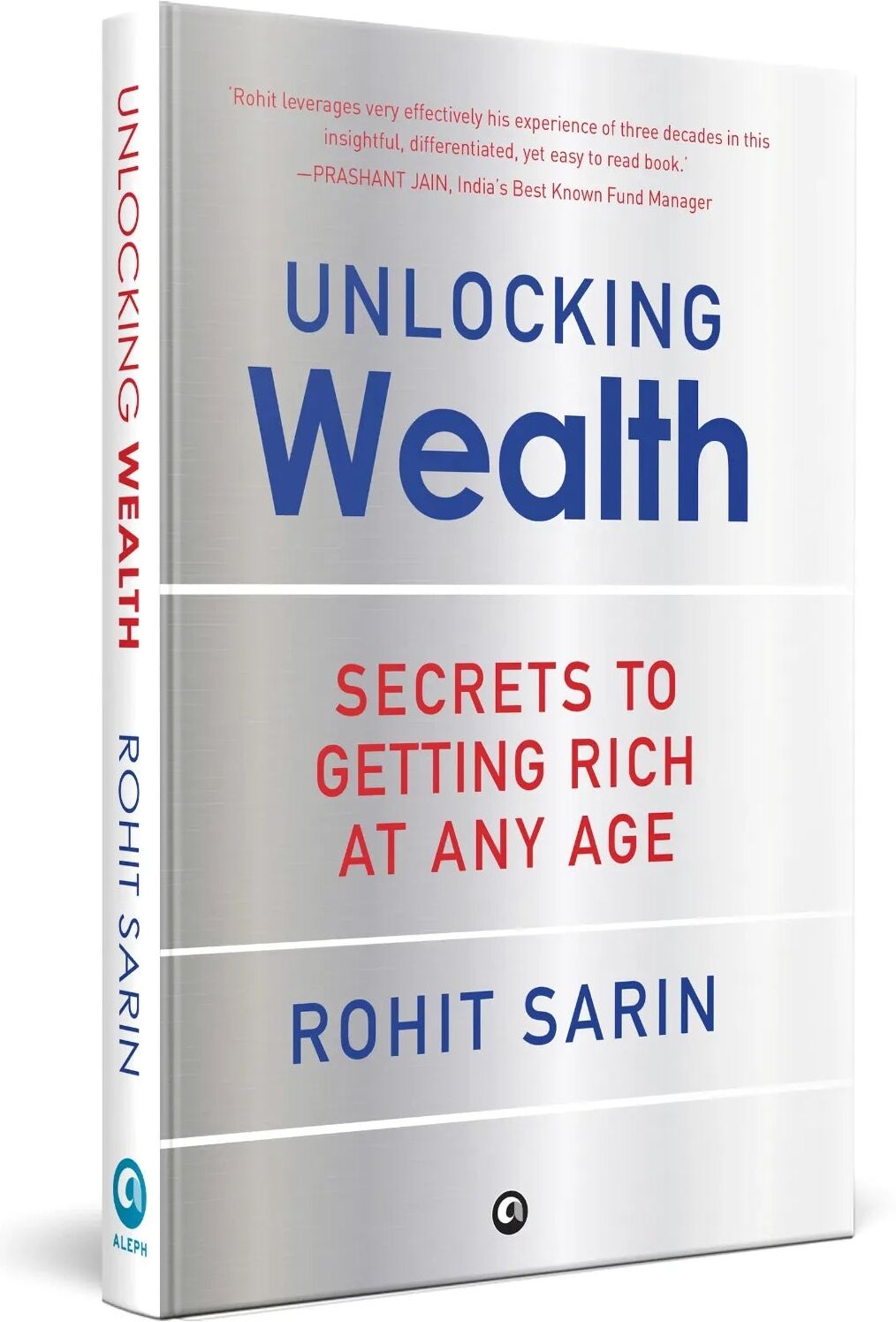
Unlocking Wealth: Secrets to Getting Rich at Any Age by Rohit Sarin - Personal Finance Hardback - Aleph Book Company -Unlocking Wealth: Secrets to Getting Rich at Any Age by Rohit Sarin is a practical guide to building lasting financial security. Written by wealth management veteran Rohit Sarin, this book draws on nearly three decades of advising some of India's wealthiest families. Sarin breaks down the mindset, habits, and strategies that separate those who build real wealth from those who don't. The book offers clear, actionable guidance on smart saving habits, sound investment principles, calculated risk-taking, and the psychological traps that keep people from building real wealth. Whether you're starting your career or already managing a substantial portfolio, this hardback provides useful insights for anyone looking to build lasting financial security.2,99 £*Shipping: 2,99 £Secure redirect to the provider
-
Are equivalence classes equal?
Equivalence classes are not equal in the sense that they may contain different elements. However, equivalence classes are equal in the sense that they represent the same set of elements that are equivalent under a given equivalence relation. In other words, two equivalence classes are equal if they contain the same elements that are related to each other in the same way according to the equivalence relation. **
-
What are equivalence relations?
Equivalence relations are a type of relation between elements of a set that satisfy three properties: reflexivity, symmetry, and transitivity. Reflexivity means that every element is related to itself. Symmetry means that if one element is related to another, then the other is related to the first. Transitivity means that if one element is related to a second, and the second is related to a third, then the first is related to the third. Equivalence relations are important in mathematics and other fields because they allow us to classify elements of a set into distinct equivalence classes based on their relationships with each other. **
-
What are equivalence points?
Equivalence points are the points in a titration where the amount of titrant added is stoichiometrically equivalent to the amount of analyte present in the sample. At the equivalence point, the reaction between the titrant and analyte is complete, and the solution is in its most stable state. This is often indicated by a sharp change in pH or a color change in the solution. The equivalence point is used to determine the concentration of the analyte in the sample. **
-
Can you determine all equivalence classes with respect to this equivalence relation?
No, I cannot determine all equivalence classes with respect to the equivalence relation without knowing the specific relation in question. The equivalence classes depend on the specific definition of the relation and the elements involved. Each equivalence class represents a set of elements that are related to each other according to the given relation. **
* All prices are inclusive of VAT and, if applicable, plus shipping costs. The offer information is based on the details provided by the respective shop and is updated through automated processes. Real-time updates do not occur, so deviations can occur in individual cases. ** Note: Parts of this content were created by AI.